Search visibility for the AI era

SEO and AEO Strategy for Google Search, ChatGPT, Gemini, Perplexity, and AI Answer Engines

Modern organic growth now lives in two connected ecosystems: traditional search engines and AI answer engines. A strong SEO and AEO strategy helps your brand rank for high-intent keywords, earn visibility in featured snippets, and become the source that large language models cite when users ask direct questions. If your website only targets rankings, you may miss the growing layer of discovery happening inside ChatGPT, Gemini, Perplexity, Google AI Overviews, and other answer-first interfaces.

The opportunity is simple: publish pages that are technically sound for search engine optimization and structurally clear for answer engine optimization. When your content is fast, credible, entity-rich, and easy to summarize, it can generate more impressions, more branded demand, and more qualified conversions across both search and AI-assisted discovery.

Conversion-focused SEO and AEO is not just about traffic. It is about attracting the right searcher, framing the problem in business terms, demonstrating expertise quickly, reducing friction, and moving readers toward a clear next step such as booking a call, requesting an audit, or starting a project.

  • Technical SEO foundations for crawlability and speed
  • Entity-rich copy built for AI answer retrieval
  • FAQ, schema, and structured content blocks
  • Conversion-focused messaging for service pages
SEO vs AEO

SEO and AEO are closely related disciplines, but they optimize for different discovery behaviors.

Search Engine Optimization for Google, Bing, and traditional search results

Search engine optimization improves how well a page can be crawled, indexed, understood, and ranked in search engine results pages. Strong SEO depends on site architecture, page speed, internal linking, metadata, keyword targeting, topical authority, and a satisfying user experience after the click. It is still the foundation of durable organic growth because search intent often signals a user who is researching, comparing, or ready to buy.

Answer Engine Optimization for ChatGPT, Gemini, Perplexity, and Google AI Overviews

Answer engine optimization improves how easily your content can be extracted, summarized, and cited by AI systems. Strong AEO depends on direct answers, clean heading structure, entity clarity, concise definitions, supporting evidence, trustworthy sourcing, and reusable facts that models can quote with confidence. AEO does not replace SEO; it extends it by helping your brand show up when the interface delivers an answer before the user ever sees a list of blue links.

Practical framework

How to create entity-rich landing pages that rank in search and perform in AI-generated answers

01

Target questions, entities, and commercial intent in the same content plan

Start with the real language your audience uses. Combine head terms, long-tail questions, and entity phrases so the page can address both search demand and answer-engine retrieval patterns.

02

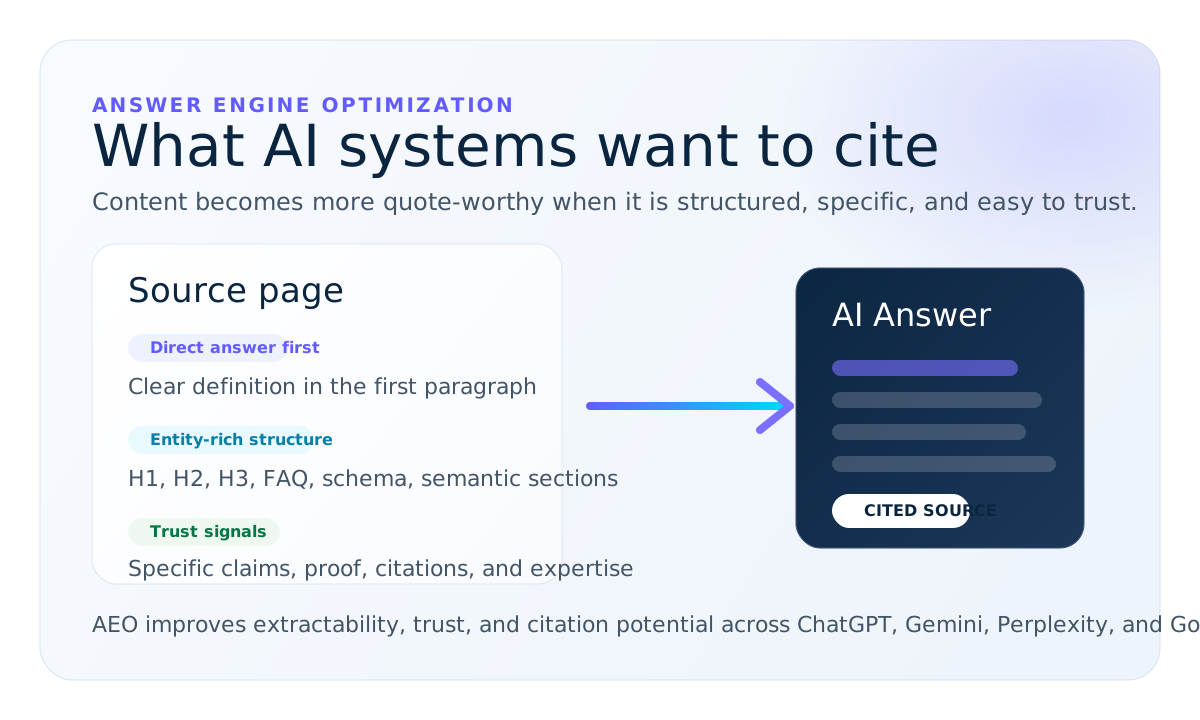
Answer the primary question early with a clean summary paragraph

The first screen should clearly define the topic and explain the value of the page. This helps users, search engines, and language models understand the page without guessing.

03

Use H1, H2, H3, bullets, tables, and FAQ structure to improve parseability

Scannable sections make content easier to quote, easier to skim, and easier to crawl. Good structure increases the chance of winning rich results, snippets, and answer citations.

04

Support claims with expertise, evidence, and conversion-ready next steps

AI systems prefer trustworthy sources, and buyers prefer credible brands. Clear expertise signals, proof points, and a strong CTA help the page work as both a visibility asset and a revenue asset.

Core idea

Good AEO usually begins with strong SEO foundations, but high-ranking pages still need answer-ready formatting.

Many legacy SEO pages were written to satisfy keywords without fully satisfying the user’s question. That model is weakening. Today, the most resilient content is accurate, concise, structured, and rich with named entities, topic definitions, and supporting evidence. It reads well for humans, sends clear topical signals to search engines, and gives AI systems clean material to summarize and cite.

Positioning

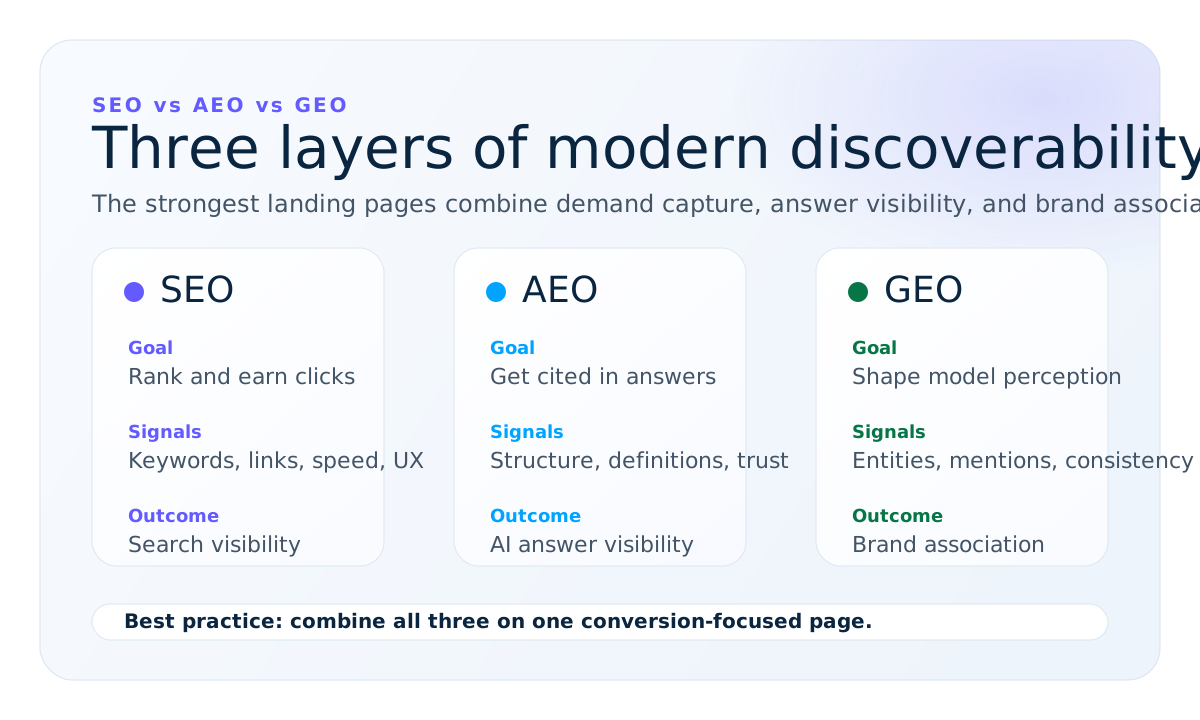
SEO, AEO, and GEO each influence discovery differently, but the best landing pages combine all three.

Comparison graphic showing SEO, AEO, and GEO as three layers of modern discoverability

SEO: capture demand in Google Search and Bing

SEO helps your site rank for high-intent commercial and informational searches. It is the discipline that improves visibility in search results, earns clicks, and grows qualified sessions from users actively looking for solutions.

AEO: become the preferred source for answer engines and AI summaries

AEO helps your content get quoted, summarized, and cited in AI-first experiences. It increases the chance that your brand becomes part of the answer layer rather than being hidden behind it.

GEO: shape how generative engines interpret your brand and expertise

Generative engine optimization reinforces brand entities, positioning, and trustworthy claims across the web so models can associate your company with the right topics, use cases, and buying scenarios.

Execution details

What an SEO and AEO content system should include on every important service or category page

Technical SEO, on-page optimization, and semantic signals

Every high-value landing page should include a clear title tag, a focused meta description, a logical heading hierarchy, compressed media, internal links to supporting resources, descriptive anchor text, and a page layout that loads quickly on mobile. Semantic completeness matters as well: include brand terms, product or service entities, problem statements, audience language, and supporting subtopics that reinforce what the page is about.

Answer-ready content blocks, schema markup, and trust signals

To improve AEO performance, add short definitions, concise summaries, FAQ sections, comparison blocks, and direct responses to likely follow-up questions. Structured data can reinforce the meaning of the page, while testimonials, author expertise, references, and specific claims improve trust. The easier it is to extract a reliable answer from your page, the more likely it is to surface in AI-assisted discovery.

Illustration showing which page elements make content easier for AI systems to cite and summarize

Conversion system

High-performing SEO and AEO pages do not stop at visibility; they turn search intent into qualified pipeline.

Message-market fit, offer clarity, and buyer-focused copy

The page should speak directly to the reader’s problem, explain the cost of inaction, and present a clear outcome. Instead of generic marketing language, use concrete buyer language tied to revenue, lead quality, sales efficiency, or pipeline growth. This is what turns organic traffic into sales conversations.

CTAs, proof, and friction reduction that improve conversion rate

A strong landing page gives the visitor one obvious next step and enough confidence to take it. That means visible CTAs, short forms or direct booking links, proof points, testimonials, implementation details, and trust signals placed close to the decision moment.

Proof and outcomes

Why businesses invest in SEO and AEO landing pages built for rankings, citations, and conversion.

More qualified inbound demand

Better topic targeting and clearer positioning bring in visitors who already understand the problem and are actively evaluating solutions.

More brand trust in competitive markets

When your brand appears in search results and AI answers with consistent language, users see authority instead of noise.

More efficient conversion paths

Clear pages reduce confusion, shorten research time, and guide readers toward contact, demo, audit, or purchase actions.

FAQ

Frequently asked questions about SEO, AEO, and AI search visibility

What is the difference between SEO and AEO?

SEO improves rankings in search engine results pages, while AEO improves how well your content can be selected, summarized, and cited in AI-generated answers. The two work best together.

Is answer engine optimization replacing search engine optimization?

No. Search engine optimization remains the foundation for discoverability, authority, and crawlable content. Answer engine optimization is a newer layer that helps your content perform when the interface returns a synthesized answer instead of only traditional listings.

Which platforms matter most for AEO right now?

ChatGPT, Gemini, Perplexity, and Google AI Overviews are the most visible answer-driven experiences for many brands today. The exact mix depends on your audience, but the same content principles generally help across platforms.

What makes a page more likely to be cited by large language models?

Clear definitions, concise summaries, strong entity usage, trustworthy claims, factual consistency, heading structure, FAQ content, and obvious expertise signals all increase the chance that a model can confidently use your page as a source.

How do you measure SEO and AEO success on a landing page?

Measure rankings, organic clicks, impressions, conversions, branded search lift, snippet ownership, question-query visibility, and any available evidence of answer-engine mentions or citations. The goal is not vanity traffic alone; it is qualified discovery that turns into revenue.

Call to action

Want a custom SEO and AEO landing page written for your brand, offer, and target keywords?

I can turn this draft into a production-ready page with your messaging, proof, schema, domain, analytics, and Cloudflare Pages deployment setup.

  • Positioning and keyword strategy
  • Entity-rich copy and FAQ architecture
  • Proof sections, CTA flow, and analytics setup